Multi island, multi invasive species eradication in French Polynesia demonstrates economies of scale
Coulston, G.
,
Cranwell, S.
,
Derand, D.
,
Ghestemme, T.
,
Griffiths, R.
,
Hall, T.
,
Pott, M.
,
Will, D.
,
Zito, J.
2019
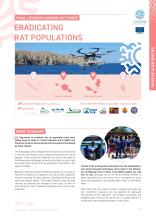
Eradication of invasive vertebrates on islands has proven to be one of the most effective returns on investment for biodiversity conservation. To recover populations of the critically endangered Polynesian ground dove (Gallicolumba erythroptera), the endangered white-throated storm-petrel (Nesofregetta fuliginosa), the endangered Tuamotu sandpiper (Prosobonia cancellata) as well as other native plant and animal species, a project was undertaken to eradicate five species of invasive alien vertebrates: Pacific rat (Rattus exulans), ship rat (R. rattus), feral cat (Felis catus), rabbit (Oryctolagus cuniculus) and goat (Capra hircus), on six islands spanning 320 km of open ocean in the Tuamotu and Gambier Archipelagos of French Polynesia. Using a ship to deliver supplies and equipment, a helicopter for offloading and bait application, and ground teams for follow up trapping and hunting, invasive vertebrates were successfully removed from five of the six islands. Pacific rats survived at one site. The project was planned and executed by a partnership consisting of international and local conservation NGOs, working together with local communities. Combining the different eradication operations into one expedition added complexity to project planning and implementation and increased the risk of the operation failing on any one island but generated greater returns on investment allowing six islands to be targeted at significantly less cost than if each island had been completed individually. An extensive and thorough planning effort, effective relationships with local stakeholders and communities, a good operational strategy and a partnership of stakeholders that each brought complementary capacities to the project contributed to its success.