Search the SPREP Catalogue

Refine Search Results

Related Countries

Tags / Keywords

Language

Available Online

Related Countries

Tags / Keywords

Available Online

16 result(s) found.

Sort by

You searched for

  • Tags / Keywords australia
    X
United Nations to “Protect Fiji” — Environmental Awareness Key to Major Findings for Australia's State of the Marine Environment report
Biodiversity Conservation, Waste Management and Pollution Control, Anamua: Treasures of the Pacific Environment
Available Online
This United Nations-backed report, hosted by the Pacific Regional Environment Programme (SPREP) in collaboration with Australia’s environmental authorities, highlights critical insights from a comprehensive assessment of Fiji’s marine environment. Key findings include: Urgent need for environmental awareness: Enhanced public understanding is essential to safeguard Fiji’s rich marine resources from threats like marine pollution, coastal habitat destruction, and climate change impacts. Marine pollution pressure: Coastal waters are increasingly burdened by land-based pollutants—plastics, sewage, industrial runoff—and remnant debris from historical events (e.g., WWII wrecks), with contamination affecting marine ecosystems. Habitat degradation: Seagrasses, coral reefs, and mangrove ecosystems face degradation stemming from coastal development, deforestation, sedimentation, and unsustainable use. Climate change and invasive species: Rising sea levels and temperature increase stress marine ecosystems. Invasive species further destabilize native biodiversity and fish stocks. Policy and capacity gaps: Although Fiji is party to major environmental agreements, enforcement and systematic marine monitoring remain inadequate. Collaborative solutions: The report calls for strengthened coordination among UN agencies, SPREP, Fiji’s government, and Australian partners. Recommendations include expanding coastal climate-change observation, improving environmental education, enhancing marine pollution legislation, and bolstering community-based conservation efforts. Together, these insights emphasize that raising environmental awareness and fostering regional cooperation—especially with Australia—are vital to protecting Fiji's marine environment and achieving sustainable development goals.

Cane toad strategy for Western Australia 2014 to 2019
BRB
Available Online

The Government of Western Australia, Department of Parks and Wildlife

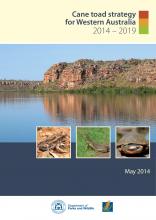
Cane toads introduced to Queensland in 1935, are major environmental pests in Western Australia, having arrived here in February 2009. The Liberal National Government released a 10-year Cane Toad Strategy for Western Australia in 2009. Over the first five years of the strategy, much has been achieved and the government has invested more than $7.8 million in on –ground activities and research to help control the spread of can toads. With a range of stakeholders, including community groups, universities, the Australian Government, local shires, Indigenous groups and others, the State of Government has implemented many new can toad management programs including a field-based cane toad surveillance and response team, strengthened quarantine measures, a free-call hotline to report cane toad sightings and cane toad drop off points. Major biological survey work has provided benchmark information on important island wildlife populations that need priority protection from cane toad. Biological controls are also being researched for the survival of native wildlife species in the short and medium terms and management of cane toads in the longer term. Educating the community has prevented new populations from establishing in Perth and elsewhere. Detector dog specially trained to sniff out cane toads is a proactive measure to stem the spread of this noxious pest. This is a review and update on the original 10 year strategy to review and update the strategy to reflect progress in implementation, the current status of cane toads in WA and results of ongoing research, and to refocus its aims and objectives. Cost effective activities and an integrated approach with other initiatives across WA, such as the $81.5 million Kimberley Science and Conservation Strategy, are required. The revised Cane Toad Strategy for Western Australia 2014-2019 will ensure the available information is used to inform Wa’s continued management of cane toads.
Recruitment dynamics of invasive species in rainforest habitats following Cyclone Larry
BRB
Available Online

Bradford, M.J.

,

Ford, A.F.

,

Galway, K.E.

,

Metcalfe, D.J.

,

Murphy, H.T.

,

Sydes, T.A.

,

Westcott, D.J.

2008
In tropical forests, natural disturbance creates opportunities for species to claim previously utilized space and resources and is considered an important mechanism in the maintenance of species diversity. However, ecologists have long recognized that disturbance also promotes exotic plant invasions. Cyclones cause extensive defoliation, loss of major branches and multiple tree falls, resulting in a significantly more open canopy and increased light and heat levels in the understorey. The widespread and massive disturbance caused by cyclones provides ideal conditions for rapid recruitment and spread of invasive species. The ecological roles of invasive species in rainforest habitats following such a severe disturbance are poorly understood. Severe category 4 Cyclone Larry crossed the North Queensland coast in March 2006 causing massive disturbance to rainforest habitats from Tully to Cairns and west to the Atherton Tablelands. We established 10 plots in an area extensively damaged by this cyclone near El Arish in North Queensland. On each plot nine 2×2 m quadrats were established with three quadrats per plot in each of the following treatments: (i) complete debris removal down to the soil layer, (ii) removal of coarse woody debris only, and (iii) uncleared. We monitored recruitment, growth and mortality of all native and invasive species in the 90 quadrats every 3 months since the cyclone. Here we present the recruitment dynamics of invasive species across the study area in relation to the level of disturbance, the type of quadrat treatment, and the diversity and abundance of the native recruiting flora over the first 12 months post?cyclone. Our results suggest that invasive species will mostly comprise a transient component of the flora in the early stages of the successional response. However, some species may have longer?term effects on the successional trajectory of the rainforest and future forest composition and structure.