Search the SPREP Catalogue

Refine Search Results

Tags / Keywords

Available Online

Tags / Keywords

Available Online

1853 result(s) found.

Sort by

You searched for

  • Tags / Keywords fiji
    X
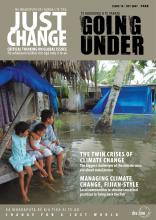
Just change: critical thinking on global issues:|What's climate change?|The twin crises of climate change|Natural hazard mitigation: the role of insurance and international disaster aid|The development of biofuels in the Pacific|Listening to a whisper: Gender and vulnerability to climate change|An interview with Annie Homasi, coordinator of the Tuvalu Climate Action network and the Tuvalu Association of NGOs|Noah's Arc to save drowning Tuvalu|Pacific island vulnerability to tropical cyclones: Facing the perils in a warming world|Managing climate change, Fijian style|The tides are getting higher and higher: A Pacific voice on climate change|Revitalising customary knowledge to cope with disasters in the face of global warming|The Vanuatu carbon credits project: supporting Pacific development through reducing emissions and protecting forests|Shifting tides: indegenous responses to global climate change|NZAID's role in the Pacific on climate change
Climate Change Resilience, Biodiversity Conservation
Available Online

Dev-Zone

2007
During my childhood … We never experienced severe sea flooding. There were storms, but they weren’t that bad. As the sea levels continue to rise in Kiribati, several king tides hit the island. Saltwater intrusion affects the quality of water in wells; floods taro patches, gardens, and puts stress on plants/trees which are very important to the life and culture of an I-Kiribati
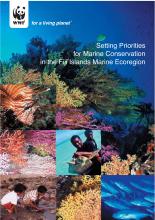
Setting priorities for marine conservation in the Fiji Islands Marine Ecoregion
Available Online

World Wildlife Fund

2007
The Fiji Islands Marine Eco region which includes our coastal, Inshore and offshore marine environment is rich in marine biodiversity and endemism. A natural and vibrant ecological mosaic, it links coastal forests and mangroves; tidal estuaries, seagrass beds and lagoons; rich coral reefs and barrier islands. Amongst this rich mosaic can be found over a third of the worlds coral species, the 3rd longest barrier reef in the world, and a large number of species of mangroves and tropical sea grass species.However, the immense natural value of this region does not end with the counting of its many unique habitats. Living, migrating and multiplying within this rich natural environment are over a third of the coral reef fish species of the IndoPacifi c, many species of whales, and 5 of the seven species of marine turtles.There is no question that the natural wealth and diversity of this region makes it a unique place in the world – a place that should be protected and nurtured for many generations to come. Our marine environment sustains an incredible diversity of natural and our people. To sustain the integrity and health of those systems for our children’s future, and beyond them the many generations that will follow, a collective biodiversity vision is needed to be shaped for the Fiji Islands Marine Eco region.