Search the SPREP Catalogue

Refine Search Results

Tags / Keywords

Available Online

Tags / Keywords

Available Online

227 result(s) found.

Sort by

You searched for

  • Tags / Keywords management action-management
    X
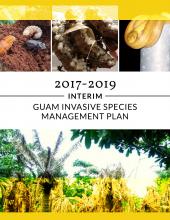
Guam invasive species management plan interim 2017-2019: interim
BRB
Available Online
2017
The 2017-2019 Interim Guam Invasive Species Management Plan (GISMP) expresses the overarching goals and priorities of the Guam Invasive Species Council (GISC or Council). The Guam Invasive Species Act of 2011 (Public Law 31-43) established the Council as Guam’s lead entity in coordinating with local, regional, national, and international jurisdic¬tions in the fight against alien invasive species. Although the GISC is in its infancy stages of organization, it draws from the collective knowledge, past research, and progress of its members in establishing the Council’s goals and priorities. Priorities and goals identified in this plan reflect current and near-term resources, member capabilities, and status of certain invasive species. Recommendations contained in the Regional Biosecurity Plan for Micronesia and Hawaii (RBP), the 2016-2018 National Inva¬sive Species Council’s Management Plan, the Regional Invasive Species Council (RISC), and various stakeholders were considered in the development of this plan. The Council also considered developments under the purview of the Hawaii Invasive Species Council and its 2015-2020 HISC Strategic Plan.
Terminal evaluation of UN Environment project: Prevention, control and management on invasive alien species in the Pacific island.
Biodiversity Conservation, BRB
Available Online

Thomas, Peter.

2017
Invasive alien species represent an insidious and pervasive threat to the environmental, economic and human well-being of the Pacific islands. Pacific island ecosystems make up one of the world’s important biodiversity hotspots, with high numbers of endemic species that are particularly vulnerable to extinction due to their limited habitat and isolation.|This book is intended to serve as a practical guide, calling attention to the need to link emergencies, disasters and development, not only in policy statements, but in practical ways. The book identifies physical and social factors and processes determining disaster vulnerability and offers the reader a range of vulnerability-reduction options in development and disaster mitigation. The book covers the main relief and response technologies for a range of natural and technological disasters, and deals with community participation, health education, training and other social aspects relevant to the protection of health and the environment in emergencies and disasters.|The UNEP/GEF Prevention, Control and Management of Invasive Alien Species in the Pacific Islands project also known as the IAS project, commenced on 12 September 2012 and was due for completion on 30 September 2016, following an extension of one year. The project was designed to provide support to Pacific Island countries in their national efforts to implement the Guidelines for Invasive Species Management in the Pacific – a Pacific Strategy for managing pest, weeds and other invasive species (Tye 2009) which were developed and adopted as the regional strategic framework for invasive species management in 2009. Ten Pacific Island countries originally participated in the IAS project, these being the Cook Islands, Federated States of Micronesia, Kiribati, Marshall Islands, Niue, Palau, Papua New Guinea, Samoa, Tonga and Vanuatu. These were reduced to nine countries with the withdrawal of Papua New Guinea following the Mid-Term Review due to issues related to the country’s readiness to engage with the project. The project was therefore, responsible for delivering of support to a culturally, geographically and economic diverse set of Small Island Developing States (SIDS) spread across the vast geographical scope of the Pacific Ocean. The project was implemented by the UN Environment as the Implementing Agency (IA) and Executed by the Secretariat of the Pacific Regional Environment Programme (SPREP) as the Executing Agency (EA). In-country sub projects and activities were facilitated by National Project Coordinators and overseen by national Invasive Species Coordinating Committees. Its goal "to conserve ecosystems, species and genetic diversity in the Pacific region" is broad and aspirational and is backed by the Objective "to reduce the environmental economic and human health impacts of invasive alien species in both terrestrial and marine habitats in the Pacific region". The Project consisted of 5 core components: Building foundations for sustainable Invasive Alien Species (IAS) management by generating awareness and support, building institution and human capacity and strengthening legislation, policy and protocols. Defining problems, prioritisation and decision making by improving baseline information on IAS distribution and status, establishing systems to assess risk and prioritise action and developing or utilising effective management techniques. Taking management action through improved bio-security and border protection, direct management action through eradication and application of best practice methods and restoring ecosystems after IAS management. Undertaking effective monitoring and evaluation of the project.| Establishing effective and efficient project management and governance. This Terminal Project Evaluation is undertaken by the Evaluation Office of the UN Environment in order to assess the effectiveness of the project and its likely future impact on the state of IAS management in the region and its likely impact on invasive species and the environmental health of the participating countries. Further, the report aims to discern lessons and offers recommendations which may help improve the development and implementation of similar multi-country projects in the future both in the Pacific region and globally.
Invasive alien species on islands: impacts, distribution, interactions and management
BRB
Available Online

Holmes, Nick D

,

Meyer, Jean-Yves

,

Pagad, Shyama

,

Russell, James C.

2017
Invasive alien species (IASs) on islands have broad impacts across biodiversity, agriculture, economy, health and culture, which tend to be stronger than on continents. Across small-island developing states (SIDSs), although only a small number of IASs are widely distributed, many more, including those with greatest impact, are found on only a small number of islands. Patterns of island invasion are not consistent across SIDS geographic regions, with differences attributable to correlated patterns in island biogeography and human development. We identify 15 of the most globally prevalent IASs on islands. IAS impacts on islands are exacerbated through interactions with a number of other global change threats, including over-exploitation, agricultural intensification, urban development and climate change. Biosecurity is critical in preventing IAS invasion of islands. Eradication of IASs on islands is possible at early stages of invasion, but otherwise is largely restricted to invasive mammals, or otherwise control is the only option. Future directions in IAS management and research on islands must consider IASs within a broader portfolio of threats to species, ecosystems and people’s livelihoods on islands. We advocate for stronger collaborations among island countries and territories faced with the same IASs in similar socio-ecological environments.
Biological control of weeds in the Pacific Island countries and territories: current status and future prospects
BRB
Available Online

Day, Michael D.

,

Winston, Rachel L.

2016
Biological control of introduced weeds in the 22 Pacific island countries and territories (PICTs) began in 1911, with the lantana seed-feeding fly introduced into Fiji and New Caledonia from Hawaii. To date, a total of 62 agents have been deliberately introduced into the PICTs to control 21 weed species in 17 countries. A further two agents have spread naturally into the region. The general impact of the 36 biocontrol agents now established in the PICTs ranges from none to complete control of their target weed(s). Fiji has been most active in weed biocontrol, releasing 30 agents against 11 weed species. Papua New Guinea, Guam, and the Federated States of Micronesia have also been very active in weed biocontrol. For some weeds such as Lantana camara, agents have been released widely, and can now be found in 15 of the 21 PICTs in which the weed occurs. However, agents for other commonly found weeds, such as Sida acuta, have been released in only a few countries in which the weed is present. There are many safe and effective biocontrol agents already in the Pacific that could be utilised more widely, and highly effective agents that have been released elsewhere in the world that could be introduced following some additional host specificity testing. This paper discusses the current status of biological control efforts against introduced weeds in the 22 PICTs and reviews options that could be considered by countries wishing to initiate weed biological control programmes.
Invasive mammal eradication on islands results in substantial conservation gains
BRB
Available Online

Jones, Holly P.

2016
More than US$21 billion is spent annually on biodiversity conservation. Despite their importance for preventing or slowing extinctions and preserving biodiversity, conservation interventions are rarely assessed systematically for their global impact. Islands house a disproportionately higher amount of biodiversity compared with mainlands, much of which is highly threatened with extinction. Indeed, island species make up nearly two-thirds of recent extinctions. Islands therefore are critical targets of conservation. We used an extensive literature and database review paired with expert interviews to estimate the global benefits of an increasingly used conservation action to stem biodiversity loss: eradication of invasive mammals on islands. We found 236 native terrestrial insular faunal species (596 populations) that benefitted through positive demographic and/or distributional responses from 251 eradications of invasive mammals on 181 islands. Seven native species (eight populations) were negatively impacted by invasive mammal eradication. Four threatened species had their International Union for the Conservation of Nature (IUCN) Red List extinction-risk categories reduced as a direct result of invasive mammal eradication, and no species moved to a higher extinction-risk category. We predict that 107 highly threatened birds, mammals, and reptiles on the IUCN Red List—6% of all these highly threatened species—likely have benefitted from invasive mammal eradications on islands. Because monitoring of eradication outcomes is sporadic and limited, the impacts of global eradications are likely greater than we report here. Our results highlight the importance of invasive mammal eradication on islands for protecting the world’s most imperiled fauna.
Improving invasive ant eradication as a conservation tool : a review
BRB
Available Online

Hoffman, Benjamin ... et al.

2016
While invasive species eradications are at the forefront of biodiversity conservation, ant eradication failures are common. We reviewed ant eradications worldwide to assess the practice and identify knowledge gaps and challenges. We documented 316 eradication campaigns targeting 11 species, with most occurring in Australia covering small areas (b10 ha). Yellow crazy ant was targeted most frequently, while the bigheaded ant has been eradicated most often. Of the eradications with known outcomes, 144 campaigns were successful, totaling approximately 9500 ha, of which 8300 ha were from a single campaign that has since been partially re-invaded. Three active ingredients, often in combination, are most commonly used: fipronil, hydramethylnon, and juvenile hormone mimics. Active ingredient, bait, and method varied considerablywith respect to species targeted,which made assessing factors of eradication success challenging. We did, however, detect effects by active ingredient, number of treatments, and method on eradication success. Implementation costs increased with treatment area, and median costs were high compared to invasive mammal eradications. Ant eradications are in a phase of increased research and development, and a logical next step for practitioners is to develop best practices. A number of research themes that seek to integrate natural history with eradication strategies and methodologies would improve the ability to eradicate ants: increasing natural history and taxonomic knowledge, increasing the efficacy of active ingredients and baits, minimizing and mitigating non-target risks, developing better tools to declare eradication success, and developing alternative eradication methodologies. Invasive ant eradications are rapidly increasing in both size and frequency, and we envisage that eradicating invasive ants will increase in focus in coming decades given the increasing dispersal and subsequent impacts.