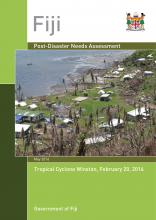
Fiji Post-Disaster Needs Assessment : Tropical Cyclone Winston, February 20, 2016

Biodiversity Conservation
Available Online
On Saturday February 20, 2016, Tropical Cyclone (TC) Winston, an extremely destructive Category 5 cyclone, struck Fiji. TC Winston was the first Category 5 cyclone to directly impact Fiji and the most intense cyclone on record to affect the country.1 Fijis Eastern Division was the first to be struck, with Koro, Ovalau and Taveuni Islands sustaining severe damage. The cyclone swept across Fijis islands, reaching its peak strength shortly before making landfall on the countrys largest island, Viti Levu. Maximum average wind speeds reached 233km/hour and wind gusts peaked at around 306km/hour, making Winston one of the most powerful cyclones ever recorded in the Southern Hemisphere.2 In addition to the extreme wind speeds, many islands were flooded by storm surges, including Koro Island and the southern coast of Fijis secondlargest island, Vanua Levu, which was inundated almost 200 meters inland in some areas. Following TC Winstons passage from Fiji, reports emerged of widespread damage and destruction, with the cyclone impacting approximately 540,400 people, equivalent to 62 percent of the countrys total population.3 The storm brought down the power and communications systems linking the islands, with approximately 80 percent of the nations population losing power, including the entire island of Vanua Levu, and 44 fatalities were subsequently confirmed. Entire communities were destroyed and approximately 40,000 people required immediate assistance following the cyclone.4 30,369 houses, 495 schools and 88 health clinics and medical facilities were damaged or destroyed. In addition, the cyclone destroyed crops on a large scale and compromised the livelihoods of almost 60 percent of Fijis population.