SPREP on Facebook
SPREP on Twitter
SPREP on YouTube
SPREP on LinkedIn
Home
About us
Projects
Search
General Search
Advanced Search
Collections
Anamua: Treasures of the Pacific Environment
Ecosystem Based Adaptation
Gender
Live & Learn Environmental Education
Marine Species
Oceans
Research4Life (Peer-reviewed articles)
Samoa Conservation Society
Seabirds
Traditional Knowledge
Threatened and Migratory Species (TAMS)
Submit Publication
Log in
Search the SPREP Catalogue
Advanced Search
Refine Search Results
Collection
SPREP Publications
(238)
Biodiversity Conservation
(227)
Waste Management and Pollution Control
(121)
Climate Change Resilience
(66)
BRB
(56)
Environmental Governance
(19)
Climate Science and Information
(10)
PCCP
(6)
Related Countries
Pacific Region
(169)
Vanuatu
(17)
Worldwide
(13)
Samoa
(12)
Solomon Islands
(11)
Fiji
(10)
Tonga
(8)
Papua New Guinea
(7)
Wallis and Futuna
(7)
Cook Islands
(6)
Kiribati
(6)
Palau
(6)
Federated States of Micronesia
(5)
French Polynesia
(5)
Niue
(5)
Republic of the Marshall Islands
(5)
Nauru
(4)
Tuvalu
(4)
New Caledonia
(2)
Guam
(1)
Project(s)
Pacific BioScapes Programme
(42)
PacWastePlus
(18)
Pacific Esosystem-based Adaptation to Climate Change Plus (PEBACC+)
(6)
Vanuatu Klaemet blong Redy, Adapt mo Protekt (Van-KIRAP)
(6)
Sustainable Waste Actions in the Pacific (SWAP)
(5)
Climate and Oceans Support Program in the Pacific (COSPPac 3)
(3)
By-Catch Integrated Ecosystem Management (BIEM)
(2)
Scaling up Pacific Adaptation (SUPA)
(2)
Kiwa Initiative
(1)
Tags / Keywords
oceania
(236)
pacific
(235)
waste management
(115)
climate change
(78)
PacWastePlus
(68)
factsheets
(67)
invasive species
(44)
biodiversity
(35)
conservation
(32)
climatic changes
(30)
BioScapes
(29)
disaster risks
(29)
vulnerability
(29)
eu
(28)
samoa
(28)
State Environment Conservation Pacific 2020
(22)
vanuatu
(22)
problem definition
(18)
problem definition-baseline
(18)
prismss
(17)
ecosystems
(15)
federated states of micronesia
(15)
fiji
(15)
nature
(15)
Ocean
(15)
palau
(14)
solomon islands
(13)
country profile
(12)
EUPasifika
(12)
kiribati
(12)
natural solutions
(12)
pollution control
(12)
waste data
(12)
Our Pacific Ocean
(11)
Our stories factsheet
(11)
Pacific Biodiversity
(11)
plastic pollution
(11)
PROTÉGÉ
(11)
tonga
(11)
cook islands
(10)
ACPMEA 3
(9)
management
(9)
MEA factsheet
(9)
solid waste
(9)
ipcc pacific factsheets
(8)
monitoring
(8)
niue
(8)
pacific conversation series
(8)
papua new guinea
(8)
resilient
(8)
acpmea
(7)
ecosystem-based adaptation
(7)
invasive exotic species
(7)
JPRISM II
(7)
marine species
(7)
nauru
(7)
ocean acidification
(7)
organic material
(7)
protection
(7)
solid waste management
(7)
covid-19
(6)
Delegation Of The European Union for the Pacific
(6)
ecosystem based adaptation
(6)
foundations-generating support
(6)
marine litter
(6)
renewable energy
(6)
snapshot
(6)
tuvalu
(6)
VanKIRAP
(6)
wallis and futuna
(6)
waste disposal
(6)
#recycling
(5)
ARFD
(5)
australia
(5)
biosecurity
(5)
BirdLife international
(5)
composting
(5)
COP28
(5)
eba
(5)
fisheries
(5)
little fire ant
(5)
Pacific Media Mana Kit factsheet series
(5)
seabirds
(5)
SWAP
(5)
waste collection
(5)
waste composition
(5)
whales and dolphins
(5)
anoplolepis gracilipes
(4)
ants
(4)
ANU IPCC Pacific factsheets
(4)
climate change resilience
(4)
Container deposit scheme
(4)
french polynesia
(4)
invasive plants
(4)
management action
(4)
management action-management
(4)
marine
(4)
new caledonia
(4)
organic waste
(4)
PacificBiodiversity
(4)
rmi
(4)
species
(4)
sustainable waste
(4)
turtles
(4)
waste generation
(4)
yellow crazy ant
(4)
african big-headed ant
(3)
argentine ant
(3)
asbestos
(3)
asbestos assessment
(3)
BRS treaties
(3)
bufo marinus
(3)
cane toad
(3)
cerf rusa
(3)
conversations
(3)
coral
(3)
coral reefs
(3)
Delegation Of The European Union For The Pasifika
(3)
e-waste
(3)
fsm
(3)
giant toad
(3)
invasive animals
(3)
ipcc pacific factsheet
(3)
Management of established invasives
(3)
marine biodiversity
(3)
naturalsolutions
(3)
noumea convention
(3)
pandemic
(3)
pheidole megacephala
(3)
rats
(3)
recyclables
(3)
red imported fire ant
(3)
reef
(3)
Republic of Marshall Islands
(3)
republic of the marshall islands
(3)
Resilient Pacific
(3)
rhinella marina
(3)
Rusa timorensis russa (Rusa deer)
(3)
sea turtles
(3)
solenopsis invicta
(3)
Timor-leste
(3)
TNC
(3)
tourism
(3)
wasmannia auropunctata
(3)
waste recycling
(3)
aerobic decomposistion
(2)
agriculture
(2)
asia
(2)
basel convention
(2)
Baseline and monitoring
(2)
BIEM
(2)
BIEM Initiative
(2)
biological diversity
(2)
BLI
(2)
browsing ant
(2)
buidling capacity
(2)
chemical treaties
(2)
climate change adaptation
(2)
climate change mitigation
(2)
climate resilience
(2)
convention
(2)
Convention on Biological Diversity
(2)
coral reef
(2)
cultivation
(2)
data
(2)
decisions
(2)
Decomposition
(2)
drone
(2)
early detection rapid response
(2)
ecological restoration
(2)
education
(2)
EEZ
(2)
environmental
(2)
eradication
(2)
extinction
(2)
financing
(2)
food security
(2)
forests
(2)
forêts humides
(2)
global warming
(2)
healthcare waste
(2)
household waste composition
(2)
human health
(2)
improvements
(2)
invasive
(2)
kava
(2)
knowledge
(2)
linepithema humile
(2)
marine animals
(2)
marine bioregions
(2)
marine invasive species
(2)
meas
(2)
micronesia
(2)
microplastics
(2)
monitoring protocols
(2)
MSP
(2)
Multilateral environmental agreement
(2)
NbS
(2)
nylanderia fulva
(2)
ongulés envahissants
(2)
Pacific Regional Invasive Species Management Support Services (PRISMSS)
(2)
PEBACC+
(2)
plastics pollution
(2)
Protect Our Islands (POI)
(2)
Pycnonotus cafer (Red-vented bulbul)
(2)
Rattus exulans (Pacific rat )
(2)
rattus sp
(2)
Rattus spp. (Rats)
(2)
republic of marshall islands
(2)
ResilientPacific
(2)
restoration
(2)
rotterdam convention
(2)
sharks
(2)
sharks and rays
(2)
singapore ant
(2)
small island developing states
(2)
solenopsis geminata
(2)
stockholm convention
(2)
sustainable financing
(2)
sustainable waste actions in the Pacific
(2)
TheNatureConservancy
(2)
threatened and endangered
(2)
traditional knowledge
(2)
trichomyrmex destructor
(2)
tropical fire ant
(2)
upland
(2)
War On Weeds (WOW)
(2)
Wasmannia auropunctata (little fire ant )
(2)
water sanitation
(2)
Achatina fulica (Giant African Snail)
(1)
Acridotheres tristis (Common Myna)
(1)
action
(1)
actions needed
(1)
adaptation costs
(1)
addressing asbestos
(1)
Aerated Static pile
(1)
animal feed
(1)
Anoplolepis gracilipes (Yellow crazy ant )
(1)
aquatic invasive species
(1)
asbestos management
(1)
asbestos waste
(1)
asian clam
(1)
asian needle ant
(1)
assessments
(1)
asteria amurensis
(1)
atoll
(1)
atolls
(1)
atolls protection
(1)
awareness
(1)
ballast water management
(1)
battling invasive species
(1)
bay
(1)
BBNJ treaty
(1)
bicoloured pennant ant
(1)
bicoloured trailing ant
(1)
bio-security
(1)
biodiversité
(1)
biodviersity
(1)
biogas
(1)
biopama
(1)
black crazy ant
(1)
Boiga irregularis (brown treesnake)
(1)
Bonn convention
(1)
Bufo marinus (Cane toad)
(1)
building capacity
(1)
bulky waste
(1)
capacity constraints
(1)
Castilla elastica
(1)
cats
(1)
cbd
(1)
CBD COP16
(1)
Cecropia peltata (Trumpet tree | Bacano | snakewood)
(1)
Central Province
(1)
cetaceans
(1)
challenges
(1)
chasse participative
(1)
chemicals
(1)
chiens détecteurs
(1)
chinese mitten crab
(1)
cholera bacteria
(1)
Chromolaena odorata (Siam weed)
(1)
chuuk
(1)
cites
(1)
climate actions
(1)
climate resilient roads
(1)
CMS
(1)
coastal areas
(1)
cochon ensauvagé
(1)
coconut rhinoceros beetle
(1)
coffee berry borer
(1)
communities
(1)
Compost
(1)
conservation and protected areas
(1)
conservation areas
(1)
Convention on Migratory Species
(1)
coral protection
(1)
country:solomon islands
(1)
Crocodile
(1)
desecheo island
(1)
difficult white-footed ant
(1)
disaster
(1)
disaster recovery
(1)
disaster resilience
(1)
disaster risk management
(1)
early
(1)
eCITES
(1)
economic opportunities
(1)
economy
(1)
ecosystem
(1)
ecosystem management
(1)
ecotourism
(1)
eia
(1)
eichhornia crassipes
(1)
electronic
(1)
emissions
(1)
environmenbtal impact assessment
(1)
environmental agreements
(1)
environmental impacts
(1)
environmental management
(1)
environment impact assessment
(1)
ericheir sinensis
(1)
exposure
(1)
Falcataria mollucana (Albizia)
(1)
fauna
(1)
felis catus
(1)
fijian white-footed ant
(1)
financial management
(1)
financial status
(1)
fire ants
(1)
fishing
(1)
flora
(1)
forest
(1)
foundations-building capacity
(1)
foundations - legislation, policy, and protocols
(1)
framework
(1)
freshwater
(1)
Gau
(1)
Gau Island
(1)
GCCA + SUPA
(1)
gef 6 rip
(1)
gender
(1)
Generating support
(1)
geography
(1)
ghost ant
(1)
glass bottle recycling
(1)
globally
(1)
governance
(1)
greenhouse gas
(1)
greenhouse gas emissions
(1)
growth challenges
(1)
guam
(1)
guide
(1)
guidelines
(1)
harvest
(1)
hazardous waste
(1)
health
(1)
health systems
(1)
herpestes auropunctatus
(1)
Herpestes auropunctatus (Mongoose | Indian mongoose)
(1)
household
(1)
human developments
(1)
hypothenemus hampei
(1)
Iguana iguana (Green iguana | American Iguana)
(1)
impacts and risks
(1)
impacts on humans
(1)
income services
(1)
indian mongoose
(1)
indicators
(1)
inform
(1)
infrastructure
(1)
inter-island biosecurity
(1)
international treaty
(1)
intructions
(1)
invasive alien plants
(1)
IUCN
(1)
ivasive species
(1)
J-PRISM II
(1)
KBA
(1)
KBAs
(1)
Key Biodiversity Areas
(1)
key facts
(1)
kiribati-line islands
(1)
kiritimati island
(1)
Kiwa initiative
(1)
knowledge exchange
(1)
Kosrae
(1)
lagoon water
(1)
Laika
(1)
Lampropholis delicata
(1)
landfill
(1)
landfill disposal
(1)
land mass
(1)
law and legislation
(1)
LEAP
(1)
learning
(1)
legal
(1)
legilation and policies
(1)
legislation
(1)
Legislation, Policy, Protocols
(1)
legislation, policy and protocols
(1)
lepisiota frauenfeldi
(1)
lepisiota sp
(1)
life cycle
(1)
linepithemahumile
(1)
liquid fertiliser
(1)
local
(1)
loss and damage
(1)
management plan
(1)
mangrove
(1)
marine areas
(1)
Marine coastal
(1)
marine ecosystem
(1)
marine ecosystems
(1)
marine heatwaves
(1)
marine pollution
(1)
marine resources
(1)
marine spatial
(1)
marinespatialplanning
(1)
Marine Spatial Planning
(1)
marine turtles
(1)
mercury
(1)
Merremia peltata (Big leaf )
(1)
meteorology
(1)
meteorology strategy
(1)
migration
(1)
minamata convention
(1)
mitigation
(1)
mnemiopsis leidyi
(1)
mongoose
(1)
monomorium floricola
(1)
monomorium pharaonis
(1)
mulch
(1)
National Plan of Action
(1)
national policies
(1)
Natural disasters
(1)
natural hazards
(1)
nature-based solutions
(1)
nature based-solutions
(1)
new sources
(1)
Nggela Islands
(1)
north american comb jelly
(1)
northern pacific seastar
(1)
ocean and coasts
(1)
oceans
(1)
oil pollution
(1)
organic fertiliser
(1)
oryctes rhinoceros
(1)
overview
(1)
pachycondyla chinensis
(1)
pacific conservation series
(1)
Pacific Coral Reef Action Plan
(1)
Pacific Invasive Learning Network
(1)
Pacific islands
(1)
Pacific Islands Protected Area Portal
(1)
pandemics
(1)
paratrechina longicornis
(1)
Passer domesticus (House sparrow)
(1)
pharaoh ant
(1)
PIPAP
(1)
PIRT
(1)
pitcairn islands
(1)
plan
(1)
plastic
(1)
plastic-free
(1)
plastic policy
(1)
plastic waste
(1)
png
(1)
Pohnpei
(1)
policy
(1)
pollution
(1)
Pomarea nigra (Tahiti monarch | Omama'o)
(1)
portal
(1)
potamocorbula amurensis
(1)
PPOA
(1)
prepaid bags
(1)
Problem definition, Prioritisation, Decision-making
(1)
Protected Area Network
(1)
protected areas
(1)
Protected Areas Network Policy Framework
(1)
puerto rico
(1)
quality services
(1)
questions
(1)
Ra
(1)
Raiatea
(1)
rainfall
(1)
rangers
(1)
rasberry crazy ant
(1)
raspberry ant
(1)
rat
(1)
rat eradication
(1)
rattus exulans
(1)
rattus rattu
(1)
Rattus rattus (Ship rat )
(1)
Rays
(1)
recovery agenda
(1)
recyclable
(1)
reefs
(1)
regional
(1)
regional cooperation
(1)
research
(1)
resilience community
(1)
resource kit
(1)
responsibilities
(1)
restoration project
(1)
reuse
(1)
reuse options
(1)
risk
(1)
risk hazard
(1)
rodent
(1)
roles
(1)
roundtable
(1)
Russell Islands
(1)
Salvinia molesta (Giant salvinia)
(1)
sanctuary
(1)
Savo Island
(1)
science policy
(1)
seabird
(1)
seabird action plan
(1)
seabird populations
(1)
settlements
(1)
sharks protection
(1)
similar groove-headed ant
(1)
SNMSMP
(1)
social protection
(1)
soild waste
(1)
soil resources
(1)
soils
(1)
Solenopsis invicta (Red imported fire ant)
(1)
solid waste management plan
(1)
Sus scrofa (Pig)
(1)
sustainable
(1)
sustainable ways
(1)
sustaining food resources
(1)
TAMS
(1)
tapinoma melanocephalum
(1)
Taputapuatea
(1)
technomyrmex albipes
(1)
technomyrmex difficilis
(1)
technomyrmex vitiensis
(1)
temperature
(1)
terrestrial
(1)
tetramorium bicarinatum
(1)
tetramorium simillimum
(1)
tides event
(1)
TISSAP
(1)
tokelau
(1)
tourism development
(1)
toxic dinoflagellates
(1)
traditional
(1)
transportation
(1)
transportation management
(1)
transport infrastructure
(1)
treaty
(1)
TREDS
(1)
tropical cyclones
(1)
tutrles
(1)
Ua Pou
(1)
understanding ocean
(1)
University of Newcastle
(1)
Upolu
(1)
urban infrastructure
(1)
urban infrastructure and planning
(1)
used oils
(1)
Vanua Nakorotubo
(1)
Vatu-i-Ra
(1)
vava'u
(1)
vibrio cholerae
(1)
vulenerability
(1)
vulnerable
(1)
Wasps/yellowjackets
(1)
waste categorization
(1)
waste landfill
(1)
waste management policies
(1)
waste managment
(1)
waste volume
(1)
water availability
(1)
water hyacinth
(1)
water resilient
(1)
water supply
(1)
WCS
(1)
weather
(1)
wedge-tailed shearwaters
(1)
wellbeing
(1)
wetlands
(1)
white-footed house ant
(1)
Wildlife Conservation Society
(1)
wildlife protection
(1)
windrows
(1)
woodchips
(1)
yap
(1)
Author
SPREP
(47)
Secretariat of the Pacific Regional Environment Programme (SPREP)
(21)
Asian Development Bank.
(11)
SPC
(11)
Secretariat of the Pacific Regional Environment Programme.
(10)
PacWaste
(9)
Secretariat of the Convention on Biological Diversity.
(6)
Disaster Management Office, MNRE, Samoa
(5)
SOPAC
(4)
UNEP
(4)
BSRP
(3)
CCCPIR
(3)
PIPSO
(3)
PROE / SPREP
(3)
Agence Francaise de Développement
(2)
European Union (EU)
(2)
FDRC
(2)
Lancare Research Manaaki Whenua
(2)
Lautoka City Council
(2)
Pacific Meteorological Council
(2)
Organisation
Secretariat of the Pacific Regional Environment Programme (SPREP)
(348)
United Nations Environment Programme (UNEP)
(45)
Secretariat of the Pacific Community (SPC)
(19)
Asian Development Bank (ADB)
(14)
Asian Development Bank.
(11)
Australian National University (ANU)
(11)
University of the South Pacific (USP)
(7)
Government of Samoa
(6)
Pacific Community (SPC)
(5)
Pacific Islands Forum (PIFS)
(5)
Secretariat of the Convention on Biological Diversity.
(5)
Applied Geoscience and Technology Division (SOPAC) of SPC
(4)
Australia National University
(4)
Intergovernmental Panel of Climate Change (IPCC)
(4)
Secretariat of the Pacific Regional Environment Programme (SPREP) / PROE
(4)
The Pew Charitable Trusts
(4)
World Wide Fund for Nature (WWF)
(4)
Asian Development Bank
(3)
Commonwealth of Australia
(3)
Language
(-)
English
(530)
French
(19)
Samoan
(3)
Bislama
(1)
Publication Year
2025
(63)
2024
(55)
2023
(22)
2022
(50)
2021
(29)
2020
(64)
2019
(25)
2018
(21)
2017
(43)
2016
(6)
2015
(28)
2014
(30)
2013
(7)
2012
(1)
2011
(2)
2010
(3)
2009
(3)
2008
(2)
2006
(7)
2005
(3)
2000
(1)
1999
(1)
1990
(1)
1989
(2)
Material Type
(-)
Factsheet
(530)
Report
(6257)
Environmental Impact Assessment
(1044)
Annual report
(942)
Strategy
(853)
Article
(641)
Video
(535)
Book
(447)
Newsletter
(418)
Presentation
(327)
Plan
(272)
Guidelines
(244)
Brochure
(232)
Booklet
(117)
Summary
(117)
Poster
(108)
Project Document
(101)
Manual
(91)
Toolkit
(87)
Audiovisual
(81)
Available Online
Yes
(458)
No
(72)
Collection
SPREP Publications
(238)
Biodiversity Conservation
(227)
Waste Management and Pollution Control
(121)
Climate Change Resilience
(66)
BRB
(56)
Environmental Governance
(19)
Climate Science and Information
(10)
PCCP
(6)
Related Countries
Pacific Region
(169)
Vanuatu
(17)
Worldwide
(13)
Samoa
(12)
Solomon Islands
(11)
Fiji
(10)
Tonga
(8)
Papua New Guinea
(7)
Wallis and Futuna
(7)
Cook Islands
(6)
Kiribati
(6)
Palau
(6)
Federated States of Micronesia
(5)
French Polynesia
(5)
Niue
(5)
Republic of the Marshall Islands
(5)
Nauru
(4)
Tuvalu
(4)
New Caledonia
(2)
Guam
(1)
Tags / Keywords
oceania
(236)
pacific
(235)
waste management
(115)
climate change
(78)
PacWastePlus
(68)
factsheets
(67)
invasive species
(44)
biodiversity
(35)
conservation
(32)
climatic changes
(30)
BioScapes
(29)
disaster risks
(29)
vulnerability
(29)
eu
(28)
samoa
(28)
State Environment Conservation Pacific 2020
(22)
vanuatu
(22)
problem definition
(18)
problem definition-baseline
(18)
prismss
(17)
ecosystems
(15)
federated states of micronesia
(15)
fiji
(15)
nature
(15)
Ocean
(15)
palau
(14)
solomon islands
(13)
country profile
(12)
EUPasifika
(12)
kiribati
(12)
natural solutions
(12)
pollution control
(12)
waste data
(12)
Our Pacific Ocean
(11)
Our stories factsheet
(11)
Pacific Biodiversity
(11)
plastic pollution
(11)
PROTÉGÉ
(11)
tonga
(11)
cook islands
(10)
ACPMEA 3
(9)
management
(9)
MEA factsheet
(9)
solid waste
(9)
ipcc pacific factsheets
(8)
monitoring
(8)
niue
(8)
pacific conversation series
(8)
papua new guinea
(8)
resilient
(8)
acpmea
(7)
ecosystem-based adaptation
(7)
invasive exotic species
(7)
JPRISM II
(7)
marine species
(7)
nauru
(7)
ocean acidification
(7)
organic material
(7)
protection
(7)
solid waste management
(7)
covid-19
(6)
Delegation Of The European Union for the Pacific
(6)
ecosystem based adaptation
(6)
foundations-generating support
(6)
marine litter
(6)
renewable energy
(6)
snapshot
(6)
tuvalu
(6)
VanKIRAP
(6)
wallis and futuna
(6)
waste disposal
(6)
#recycling
(5)
ARFD
(5)
australia
(5)
biosecurity
(5)
BirdLife international
(5)
composting
(5)
COP28
(5)
eba
(5)
fisheries
(5)
little fire ant
(5)
Pacific Media Mana Kit factsheet series
(5)
seabirds
(5)
SWAP
(5)
waste collection
(5)
waste composition
(5)
whales and dolphins
(5)
anoplolepis gracilipes
(4)
ants
(4)
ANU IPCC Pacific factsheets
(4)
climate change resilience
(4)
Container deposit scheme
(4)
french polynesia
(4)
invasive plants
(4)
management action
(4)
management action-management
(4)
marine
(4)
new caledonia
(4)
organic waste
(4)
PacificBiodiversity
(4)
rmi
(4)
species
(4)
sustainable waste
(4)
turtles
(4)
waste generation
(4)
yellow crazy ant
(4)
african big-headed ant
(3)
argentine ant
(3)
asbestos
(3)
asbestos assessment
(3)
BRS treaties
(3)
bufo marinus
(3)
cane toad
(3)
cerf rusa
(3)
conversations
(3)
coral
(3)
coral reefs
(3)
Delegation Of The European Union For The Pasifika
(3)
e-waste
(3)
fsm
(3)
giant toad
(3)
invasive animals
(3)
ipcc pacific factsheet
(3)
Management of established invasives
(3)
marine biodiversity
(3)
naturalsolutions
(3)
noumea convention
(3)
pandemic
(3)
pheidole megacephala
(3)
rats
(3)
recyclables
(3)
red imported fire ant
(3)
reef
(3)
Republic of Marshall Islands
(3)
republic of the marshall islands
(3)
Resilient Pacific
(3)
rhinella marina
(3)
Rusa timorensis russa (Rusa deer)
(3)
sea turtles
(3)
solenopsis invicta
(3)
Timor-leste
(3)
TNC
(3)
tourism
(3)
wasmannia auropunctata
(3)
waste recycling
(3)
aerobic decomposistion
(2)
agriculture
(2)
asia
(2)
basel convention
(2)
Baseline and monitoring
(2)
BIEM
(2)
BIEM Initiative
(2)
biological diversity
(2)
BLI
(2)
browsing ant
(2)
buidling capacity
(2)
chemical treaties
(2)
climate change adaptation
(2)
climate change mitigation
(2)
climate resilience
(2)
convention
(2)
Convention on Biological Diversity
(2)
coral reef
(2)
cultivation
(2)
data
(2)
decisions
(2)
Decomposition
(2)
drone
(2)
early detection rapid response
(2)
ecological restoration
(2)
education
(2)
EEZ
(2)
environmental
(2)
eradication
(2)
extinction
(2)
financing
(2)
food security
(2)
forests
(2)
forêts humides
(2)
global warming
(2)
healthcare waste
(2)
household waste composition
(2)
human health
(2)
improvements
(2)
invasive
(2)
kava
(2)
knowledge
(2)
linepithema humile
(2)
marine animals
(2)
marine bioregions
(2)
marine invasive species
(2)
meas
(2)
micronesia
(2)
microplastics
(2)
monitoring protocols
(2)
MSP
(2)
Multilateral environmental agreement
(2)
NbS
(2)
nylanderia fulva
(2)
ongulés envahissants
(2)
Pacific Regional Invasive Species Management Support Services (PRISMSS)
(2)
PEBACC+
(2)
plastics pollution
(2)
Protect Our Islands (POI)
(2)
Pycnonotus cafer (Red-vented bulbul)
(2)
Rattus exulans (Pacific rat )
(2)
rattus sp
(2)
Rattus spp. (Rats)
(2)
republic of marshall islands
(2)
ResilientPacific
(2)
restoration
(2)
rotterdam convention
(2)
sharks
(2)
sharks and rays
(2)
singapore ant
(2)
small island developing states
(2)
solenopsis geminata
(2)
stockholm convention
(2)
sustainable financing
(2)
sustainable waste actions in the Pacific
(2)
TheNatureConservancy
(2)
threatened and endangered
(2)
traditional knowledge
(2)
trichomyrmex destructor
(2)
tropical fire ant
(2)
upland
(2)
War On Weeds (WOW)
(2)
Wasmannia auropunctata (little fire ant )
(2)
water sanitation
(2)
Achatina fulica (Giant African Snail)
(1)
Acridotheres tristis (Common Myna)
(1)
action
(1)
actions needed
(1)
adaptation costs
(1)
addressing asbestos
(1)
Aerated Static pile
(1)
animal feed
(1)
Anoplolepis gracilipes (Yellow crazy ant )
(1)
aquatic invasive species
(1)
asbestos management
(1)
asbestos waste
(1)
asian clam
(1)
asian needle ant
(1)
assessments
(1)
asteria amurensis
(1)
atoll
(1)
atolls
(1)
atolls protection
(1)
awareness
(1)
ballast water management
(1)
battling invasive species
(1)
bay
(1)
BBNJ treaty
(1)
bicoloured pennant ant
(1)
bicoloured trailing ant
(1)
bio-security
(1)
biodiversité
(1)
biodviersity
(1)
biogas
(1)
biopama
(1)
black crazy ant
(1)
Boiga irregularis (brown treesnake)
(1)
Bonn convention
(1)
Bufo marinus (Cane toad)
(1)
building capacity
(1)
bulky waste
(1)
capacity constraints
(1)
Castilla elastica
(1)
cats
(1)
cbd
(1)
CBD COP16
(1)
Cecropia peltata (Trumpet tree | Bacano | snakewood)
(1)
Central Province
(1)
cetaceans
(1)
challenges
(1)
chasse participative
(1)
chemicals
(1)
chiens détecteurs
(1)
chinese mitten crab
(1)
cholera bacteria
(1)
Chromolaena odorata (Siam weed)
(1)
chuuk
(1)
cites
(1)
climate actions
(1)
climate resilient roads
(1)
CMS
(1)
coastal areas
(1)
cochon ensauvagé
(1)
coconut rhinoceros beetle
(1)
coffee berry borer
(1)
communities
(1)
Compost
(1)
conservation and protected areas
(1)
conservation areas
(1)
Convention on Migratory Species
(1)
coral protection
(1)
country:solomon islands
(1)
Crocodile
(1)
desecheo island
(1)
difficult white-footed ant
(1)
disaster
(1)
disaster recovery
(1)
disaster resilience
(1)
disaster risk management
(1)
early
(1)
eCITES
(1)
economic opportunities
(1)
economy
(1)
ecosystem
(1)
ecosystem management
(1)
ecotourism
(1)
eia
(1)
eichhornia crassipes
(1)
electronic
(1)
emissions
(1)
environmenbtal impact assessment
(1)
environmental agreements
(1)
environmental impacts
(1)
environmental management
(1)
environment impact assessment
(1)
ericheir sinensis
(1)
exposure
(1)
Falcataria mollucana (Albizia)
(1)
fauna
(1)
felis catus
(1)
fijian white-footed ant
(1)
financial management
(1)
financial status
(1)
fire ants
(1)
fishing
(1)
flora
(1)
forest
(1)
foundations-building capacity
(1)
foundations - legislation, policy, and protocols
(1)
framework
(1)
freshwater
(1)
Gau
(1)
Gau Island
(1)
GCCA + SUPA
(1)
gef 6 rip
(1)
gender
(1)
Generating support
(1)
geography
(1)
ghost ant
(1)
glass bottle recycling
(1)
globally
(1)
governance
(1)
greenhouse gas
(1)
greenhouse gas emissions
(1)
growth challenges
(1)
guam
(1)
guide
(1)
guidelines
(1)
harvest
(1)
hazardous waste
(1)
health
(1)
health systems
(1)
herpestes auropunctatus
(1)
Herpestes auropunctatus (Mongoose | Indian mongoose)
(1)
household
(1)
human developments
(1)
hypothenemus hampei
(1)
Iguana iguana (Green iguana | American Iguana)
(1)
impacts and risks
(1)
impacts on humans
(1)
income services
(1)
indian mongoose
(1)
indicators
(1)
inform
(1)
infrastructure
(1)
inter-island biosecurity
(1)
international treaty
(1)
intructions
(1)
invasive alien plants
(1)
IUCN
(1)
ivasive species
(1)
J-PRISM II
(1)
KBA
(1)
KBAs
(1)
Key Biodiversity Areas
(1)
key facts
(1)
kiribati-line islands
(1)
kiritimati island
(1)
Kiwa initiative
(1)
knowledge exchange
(1)
Kosrae
(1)
lagoon water
(1)
Laika
(1)
Lampropholis delicata
(1)
landfill
(1)
landfill disposal
(1)
land mass
(1)
law and legislation
(1)
LEAP
(1)
learning
(1)
legal
(1)
legilation and policies
(1)
legislation
(1)
Legislation, Policy, Protocols
(1)
legislation, policy and protocols
(1)
lepisiota frauenfeldi
(1)
lepisiota sp
(1)
life cycle
(1)
linepithemahumile
(1)
liquid fertiliser
(1)
local
(1)
loss and damage
(1)
management plan
(1)
mangrove
(1)
marine areas
(1)
Marine coastal
(1)
marine ecosystem
(1)
marine ecosystems
(1)
marine heatwaves
(1)
marine pollution
(1)
marine resources
(1)
marine spatial
(1)
marinespatialplanning
(1)
Marine Spatial Planning
(1)
marine turtles
(1)
mercury
(1)
Merremia peltata (Big leaf )
(1)
meteorology
(1)
meteorology strategy
(1)
migration
(1)
minamata convention
(1)
mitigation
(1)
mnemiopsis leidyi
(1)
mongoose
(1)
monomorium floricola
(1)
monomorium pharaonis
(1)
mulch
(1)
National Plan of Action
(1)
national policies
(1)
Natural disasters
(1)
natural hazards
(1)
nature-based solutions
(1)
nature based-solutions
(1)
new sources
(1)
Nggela Islands
(1)
north american comb jelly
(1)
northern pacific seastar
(1)
ocean and coasts
(1)
oceans
(1)
oil pollution
(1)
organic fertiliser
(1)
oryctes rhinoceros
(1)
overview
(1)
pachycondyla chinensis
(1)
pacific conservation series
(1)
Pacific Coral Reef Action Plan
(1)
Pacific Invasive Learning Network
(1)
Pacific islands
(1)
Pacific Islands Protected Area Portal
(1)
pandemics
(1)
paratrechina longicornis
(1)
Passer domesticus (House sparrow)
(1)
pharaoh ant
(1)
PIPAP
(1)
PIRT
(1)
pitcairn islands
(1)
plan
(1)
plastic
(1)
plastic-free
(1)
plastic policy
(1)
plastic waste
(1)
png
(1)
Pohnpei
(1)
policy
(1)
pollution
(1)
Pomarea nigra (Tahiti monarch | Omama'o)
(1)
portal
(1)
potamocorbula amurensis
(1)
PPOA
(1)
prepaid bags
(1)
Problem definition, Prioritisation, Decision-making
(1)
Protected Area Network
(1)
protected areas
(1)
Protected Areas Network Policy Framework
(1)
puerto rico
(1)
quality services
(1)
questions
(1)
Ra
(1)
Raiatea
(1)
rainfall
(1)
rangers
(1)
rasberry crazy ant
(1)
raspberry ant
(1)
rat
(1)
rat eradication
(1)
rattus exulans
(1)
rattus rattu
(1)
Rattus rattus (Ship rat )
(1)
Rays
(1)
recovery agenda
(1)
recyclable
(1)
reefs
(1)
regional
(1)
regional cooperation
(1)
research
(1)
resilience community
(1)
resource kit
(1)
responsibilities
(1)
restoration project
(1)
reuse
(1)
reuse options
(1)
risk
(1)
risk hazard
(1)
rodent
(1)
roles
(1)
roundtable
(1)
Russell Islands
(1)
Salvinia molesta (Giant salvinia)
(1)
sanctuary
(1)
Savo Island
(1)
science policy
(1)
seabird
(1)
seabird action plan
(1)
seabird populations
(1)
settlements
(1)
sharks protection
(1)
similar groove-headed ant
(1)
SNMSMP
(1)
social protection
(1)
soild waste
(1)
soil resources
(1)
soils
(1)
Solenopsis invicta (Red imported fire ant)
(1)
solid waste management plan
(1)
Sus scrofa (Pig)
(1)
sustainable
(1)
sustainable ways
(1)
sustaining food resources
(1)
TAMS
(1)
tapinoma melanocephalum
(1)
Taputapuatea
(1)
technomyrmex albipes
(1)
technomyrmex difficilis
(1)
technomyrmex vitiensis
(1)
temperature
(1)
terrestrial
(1)
tetramorium bicarinatum
(1)
tetramorium simillimum
(1)
tides event
(1)
TISSAP
(1)
tokelau
(1)
tourism development
(1)
toxic dinoflagellates
(1)
traditional
(1)
transportation
(1)
transportation management
(1)
transport infrastructure
(1)
treaty
(1)
TREDS
(1)
tropical cyclones
(1)
tutrles
(1)
Ua Pou
(1)
understanding ocean
(1)
University of Newcastle
(1)
Upolu
(1)
urban infrastructure
(1)
urban infrastructure and planning
(1)
used oils
(1)
Vanua Nakorotubo
(1)
Vatu-i-Ra
(1)
vava'u
(1)
vibrio cholerae
(1)
vulenerability
(1)
vulnerable
(1)
Wasps/yellowjackets
(1)
waste categorization
(1)
waste landfill
(1)
waste management policies
(1)
waste managment
(1)
waste volume
(1)
water availability
(1)
water hyacinth
(1)
water resilient
(1)
water supply
(1)
WCS
(1)
weather
(1)
wedge-tailed shearwaters
(1)
wellbeing
(1)
wetlands
(1)
white-footed house ant
(1)
Wildlife Conservation Society
(1)
wildlife protection
(1)
windrows
(1)
woodchips
(1)
yap
(1)
Author
SPREP
(47)
Secretariat of the Pacific Regional Environment Programme (SPREP)
(21)
Asian Development Bank.
(11)
SPC
(11)
Secretariat of the Pacific Regional Environment Programme.
(10)
PacWaste
(9)
Secretariat of the Convention on Biological Diversity.
(6)
Disaster Management Office, MNRE, Samoa
(5)
SOPAC
(4)
UNEP
(4)
BSRP
(3)
CCCPIR
(3)
PIPSO
(3)
PROE / SPREP
(3)
Agence Francaise de Développement
(2)
European Union (EU)
(2)
FDRC
(2)
Lancare Research Manaaki Whenua
(2)
Lautoka City Council
(2)
Pacific Meteorological Council
(2)
Organisation
Secretariat of the Pacific Regional Environment Programme (SPREP)
(348)
United Nations Environment Programme (UNEP)
(45)
Secretariat of the Pacific Community (SPC)
(19)
Asian Development Bank (ADB)
(14)
Asian Development Bank.
(11)
Australian National University (ANU)
(11)
University of the South Pacific (USP)
(7)
Government of Samoa
(6)
Pacific Community (SPC)
(5)
Pacific Islands Forum (PIFS)
(5)
Secretariat of the Convention on Biological Diversity.
(5)
Applied Geoscience and Technology Division (SOPAC) of SPC
(4)
Australia National University
(4)
Intergovernmental Panel of Climate Change (IPCC)
(4)
Secretariat of the Pacific Regional Environment Programme (SPREP) / PROE
(4)
The Pew Charitable Trusts
(4)
World Wide Fund for Nature (WWF)
(4)
Asian Development Bank
(3)
Commonwealth of Australia
(3)
Publication Year
2025
(63)
2024
(55)
2023
(22)
2022
(50)
2021
(29)
2020
(64)
2019
(25)
2018
(21)
2017
(43)
2016
(6)
2015
(28)
2014
(30)
2013
(7)
2012
(1)
2011
(2)
2010
(3)
2009
(3)
2008
(2)
2006
(7)
2005
(3)
2000
(1)
1999
(1)
1990
(1)
1989
(2)
Material Type
(-)
Factsheet
(530)
Report
(6257)
Environmental Impact Assessment
(1044)
Annual report
(942)
Strategy
(853)
Article
(641)
Video
(535)
Book
(447)
Newsletter
(418)
Presentation
(327)
Plan
(272)
Guidelines
(244)
Brochure
(232)
Booklet
(117)
Summary
(117)
Poster
(108)
Project Document
(101)
Manual
(91)
Toolkit
(87)
Audiovisual
(81)
Available Online
Yes
(458)
No
(72)
530 result(s) found.
Sort by
Publication Year
Sort results by
Created
Sort results by
Updated
Sort results by
You searched for
Material Type
Factsheet
X
clear
Law and Policy Review in Support of Marine Spatial Planning in Samoa (factsheet)
Climate Change Resilience, Biodiversity Conservation
Available Online
2022
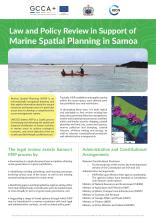
Marine spatial planning (MSP) is an internationally recognised planning tool that applies information about the natural resources and human uses of a particular ocean area to develop a comprehensive ocean management system.
samoa
factsheets
marine spatial
marine ecosystem
Samoa's Marine and Coastal Ecosystem Services Value (factsheet)
Biodiversity Conservation
Available Online
2022
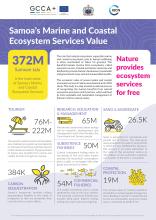
The role that natural ecosystems, especially marine and coastal ecosystems, play in human wellbeing is often overlooked or taken for granted. The benefits of humans receive from ecosystems called ecosystem service. Coastal and marine resources and biodiversity provide Samoa's businesses and households and government many real and measurable benefits.
samoa
factsheets
ecosystem
marine
coastal areas
Organics Factsheet: Windrow Composting
SPREP Publications, Waste Management and Pollution Control
Available Online
2022
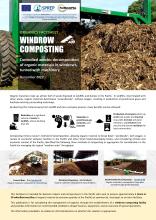
Controlled aerobic decomposition of organic materials in windrows, turned with machinery. December 2022
factsheets
solid waste management
Compost
organic material
aerobic decomposistion
windrows
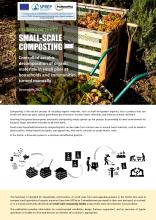
Organics Factsheet: Small-scale Composting
SPREP Publications, Waste Management and Pollution Control
Available Online
2022
Controlled aerobic decomposition of organic materials in small piles at households and communities, turned manually. December 2022
factsheets
solid waste management
composting
organic material
Organics Factsheet: Small-scale Anaerobic Digestion (WET)
SPREP Publications, Waste Management and Pollution Control
Available Online
2022
Controlled decomposition of organic materials without oxygen in a large, sealed bag or drum that produces biogas and liquid fertiliser. December 2022
waste management
factsheets
organic material
Decomposition
liquid fertiliser
biogas
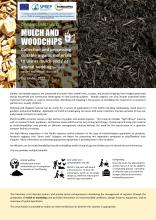
Organics Factsheet: Mulch and Woodchips
SPREP Publications, Waste Management and Pollution Control
Available Online
2022
Collection and processing suitable organic materials to use as mulch and / or animal bedding (primarily garden and woody organics). December 2022
waste management
factsheets
PacWastePlus
organic material
woodchips
mulch
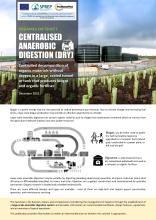
Organics Factsheet: Centralised Anaerobic Digestion (DRY)
SPREP Publications, Waste Management and Pollution Control
Available Online
2022
Controlled decomposition of organic materials without oxygen in a large, sealed tunnel or tank that produces biogas and organic fertiliser. December 2022
waste management
factsheets
PacWastePlus
organic material
Decomposition
organic fertiliser
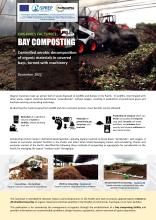
Organics Factsheet: Bay Composting.
SPREP Publications, Waste Management and Pollution Control
Available Online
2022
Controlled aerobic decomposition of organic materials in covered bays, turned with machinery. December 2022
factsheets
PacWastePlus
composting
organic material
bay
aerobic decomposistion
Organics Factsheet: Animal Feed
SPREP Publications, Waste Management and Pollution Control
Available Online
2022
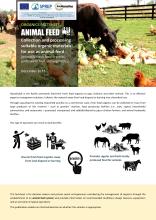
Collection and processing suitable organic materials for use as animal feed (primarily fresh food organics, particularly fruit and vegetables) December 2022.
waste management
factsheets
PacWastePlus
solid waste
organic waste
organic material
animal feed
Organics Factsheet: Aerated Static Pile Composting
SPREP Publications, Waste Management and Pollution Control
Available Online
2022
Controlled aerobic decomposition of organic materials in large piles that are aerated through perforated pipes at the base of the pile. December 2022
waste management
factsheets
PacWastePlus
solid waste
composting
Aerated Static pile
Pagination
First page
« First
Previous page
‹‹
…
Page
11
Page
12
Page
13
Page
14
Current page
15
Page
16
Page
17
Page
18
Page
19
…
Next page
››
Last page
Last »
Login