Search the SPREP Catalogue

Refine Search Results

Tags / Keywords

Available Online

Tags / Keywords

Available Online

1087 result(s) found.

Sort by

You searched for

  • Collection BRB
    X
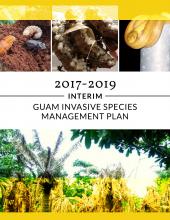
Guam invasive species management plan interim 2017-2019: interim
BRB
Available Online
2017
The 2017-2019 Interim Guam Invasive Species Management Plan (GISMP) expresses the overarching goals and priorities of the Guam Invasive Species Council (GISC or Council). The Guam Invasive Species Act of 2011 (Public Law 31-43) established the Council as Guam’s lead entity in coordinating with local, regional, national, and international jurisdic¬tions in the fight against alien invasive species. Although the GISC is in its infancy stages of organization, it draws from the collective knowledge, past research, and progress of its members in establishing the Council’s goals and priorities. Priorities and goals identified in this plan reflect current and near-term resources, member capabilities, and status of certain invasive species. Recommendations contained in the Regional Biosecurity Plan for Micronesia and Hawaii (RBP), the 2016-2018 National Inva¬sive Species Council’s Management Plan, the Regional Invasive Species Council (RISC), and various stakeholders were considered in the development of this plan. The Council also considered developments under the purview of the Hawaii Invasive Species Council and its 2015-2020 HISC Strategic Plan.
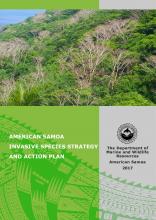
American Samoa invasive species and action plan.
BRB
Available Online
2017
American Samoa invasive species strategy and action plan for the only US territory in the South Pacific being such is faced with unique threats with its location from a national perspective and has a need for both nation al and regional collaborations. The ecological integrity of American Samoa is of utmost importance in the face of invasive species. The cultural identity of American Samoans is also closely tied to the ecological integrity of its natural environment. And given its a highly limited economy, any impact by invasive species on its natural ecosystems that provide goods and services will be almost immediate. The establishment of an invasive species plan, with its clearly articulated priority actions, goals and objectives will provide a guidance to deal with the threats of invasive species. The implementation of the plan will: (1) increase awareness of their threats; (2) inspire cooperation to prevent and minimize their impacts and implement appropriate approaches; and (3) improve decision making through the process of data and information sharing from the best available science. Priorities are: Implement urgent and necessary actions; Enhance capacities for informed decisions; Advance preventive and rapid-response protocols and measures.
Terminal evaluation of UN Environment project: Prevention, control and management on invasive alien species in the Pacific island.
Biodiversity Conservation, BRB
Available Online

Thomas, Peter.

2017
Invasive alien species represent an insidious and pervasive threat to the environmental, economic and human well-being of the Pacific islands. Pacific island ecosystems make up one of the world’s important biodiversity hotspots, with high numbers of endemic species that are particularly vulnerable to extinction due to their limited habitat and isolation.|This book is intended to serve as a practical guide, calling attention to the need to link emergencies, disasters and development, not only in policy statements, but in practical ways. The book identifies physical and social factors and processes determining disaster vulnerability and offers the reader a range of vulnerability-reduction options in development and disaster mitigation. The book covers the main relief and response technologies for a range of natural and technological disasters, and deals with community participation, health education, training and other social aspects relevant to the protection of health and the environment in emergencies and disasters.|The UNEP/GEF Prevention, Control and Management of Invasive Alien Species in the Pacific Islands project also known as the IAS project, commenced on 12 September 2012 and was due for completion on 30 September 2016, following an extension of one year. The project was designed to provide support to Pacific Island countries in their national efforts to implement the Guidelines for Invasive Species Management in the Pacific – a Pacific Strategy for managing pest, weeds and other invasive species (Tye 2009) which were developed and adopted as the regional strategic framework for invasive species management in 2009. Ten Pacific Island countries originally participated in the IAS project, these being the Cook Islands, Federated States of Micronesia, Kiribati, Marshall Islands, Niue, Palau, Papua New Guinea, Samoa, Tonga and Vanuatu. These were reduced to nine countries with the withdrawal of Papua New Guinea following the Mid-Term Review due to issues related to the country’s readiness to engage with the project. The project was therefore, responsible for delivering of support to a culturally, geographically and economic diverse set of Small Island Developing States (SIDS) spread across the vast geographical scope of the Pacific Ocean. The project was implemented by the UN Environment as the Implementing Agency (IA) and Executed by the Secretariat of the Pacific Regional Environment Programme (SPREP) as the Executing Agency (EA). In-country sub projects and activities were facilitated by National Project Coordinators and overseen by national Invasive Species Coordinating Committees. Its goal "to conserve ecosystems, species and genetic diversity in the Pacific region" is broad and aspirational and is backed by the Objective "to reduce the environmental economic and human health impacts of invasive alien species in both terrestrial and marine habitats in the Pacific region". The Project consisted of 5 core components: Building foundations for sustainable Invasive Alien Species (IAS) management by generating awareness and support, building institution and human capacity and strengthening legislation, policy and protocols. Defining problems, prioritisation and decision making by improving baseline information on IAS distribution and status, establishing systems to assess risk and prioritise action and developing or utilising effective management techniques. Taking management action through improved bio-security and border protection, direct management action through eradication and application of best practice methods and restoring ecosystems after IAS management. Undertaking effective monitoring and evaluation of the project.| Establishing effective and efficient project management and governance. This Terminal Project Evaluation is undertaken by the Evaluation Office of the UN Environment in order to assess the effectiveness of the project and its likely future impact on the state of IAS management in the region and its likely impact on invasive species and the environmental health of the participating countries. Further, the report aims to discern lessons and offers recommendations which may help improve the development and implementation of similar multi-country projects in the future both in the Pacific region and globally.
Zero-tolerance biosecurity protects high-conservation-value island nature reserve.
BRB
Available Online

Scott,John K. McKirdy, Simon J. van der Merwe, Johann Green, Roy Burbidge, Andrew A. Pickles, Greg Hardie,Darryl C. Morris, Keith Kendrick, Peter G. Thomas, Melissa L. Horton, Kristin L. O’Conner, Simon Downs, Justin Stoklosa, Richard Lagdon, Russell Marks, Barbara Naim, Malcolm Mengersen, Kerrie

2017
Barrow Island, north-west coast of Australia, is one of the world’s significant conservation areas, harboring marsupials that have become extinct or threatened on mainland Australia as well as a rich diversity of plants and animals, some endemic. Access to construct a Liquefied Natural Gas (LNG) plant, Australia’s largest infrastructure development, on the island was conditional on no non-indigenous species (NIS) becoming established. We developed a comprehensive biosecurity system to protect the island’s biodiversity. From 2009 to 2015 more than 0.5 million passengers and 12.2 million tonnes of freight were transported to the island under the biosecurity system, requiring 1.5 million hrs of inspections. No establishments of NIS were detected. We made four observations that will assist development of biosecurity systems. Firstly, the frequency of detections of organisms corresponded best to a mixture log-normal distribution including the high number of zero inspections and extreme values involving rare incursions. Secondly, comprehensive knowledge of the island’s biota allowed estimation of false positive detections (62% native species). Thirdly, detections at the border did not predict incursions on the island. Fourthly, the workforce detected more than half post-border incursions (59%). Similar approaches can and should be implemented for all areas of significant conservation value.