Search the SPREP Catalogue

Refine Search Results

Related Countries

Tags / Keywords

Language

Available Online

Related Countries

Tags / Keywords

Available Online

29 result(s) found.

Sort by

You searched for

  • Collection BRB
    X
  • Material Type Book
    X
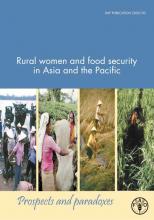
Rural women and food security in Asia and the Pacific: Prospects and paradoxes
BRB
Available Online

Balakrishnan, Revathi

,

Fairbairn-Dunlop, Peggy

2005
Agriculture and food production offer stable livelihood options to rural communities throughout Asia and the Pacific region. Even as the effects of globalization spread in the region, farm production – most often at the smallholder level – continues to be a family enterprise. A fair share of farmers in the region engages in subsistence farming and poverty is a common occurrence among them. Farm enterprises are mostly managed by family members and family labour is a critical asset and often the only reliable investment. As rural women and men toil to preserve their heritage and broaden their economic choices, their endeavours are made more difficult by a lack of resources and market fluctuations. Asian and Pacific farmers, both men and women, are guardians of biodiversity, household food security and providers of food to urban communities. In these small farm enterprises distinct gender roles and gender differentiated access to technology and resources are evident. This disparity is compounded by the neglect of investment in rural social infrastructures such as education, health care and communications. In such resource poor rural environments, the struggle by rural women for access to resources and services is inevitable. In many Asian and Pacific countries, substantial gender equality gains have been made in urban areas in education, health and employment. Yet rural women lag behind. Moreover, rural women’s work is multifaceted and demanding both as family workers and agricultural labourers. Social and economic indicators often do not do justice to their contributions. Development innovations such as microcredit and self-help groups promote rural women’s economic development, but emerging evidence suggests that gender equality in rural communities is far from an everyday reality. Persisting social biases and traditional perceptions and assumptions regarding women’s responsibilities and their capacities continue to hamper women’s progress. This publication presents an overview of both the substantial contribution made by rural women to the economies in the region and the persisting barriers to their advancement. The framework of analysis, data and information reviewed together illustrate the complexity of rural women’s work in the region and offer a broad perspective on women’s economic and social contribution as well as on the barriers they encounter in accessing resources.
Will Alien Plant Invaders Be advantaged Under Future Climates?
Climate Change Resilience, Biodiversity Conservation, BRB
Available Online

Gallagher, Rachel V.

,

Leishman, Michelle R.

The last two decades have seen an upsurge in research into the potential synergies between invasive species and climate change, with evidence emerging of increased invader success under climate change. All stages along the naturalization-invasion continuum are likely to be affected, from the introduction and establishment of alien species to their spread and transition to serious invaders. A key question is whether alien plants will have a relative advantage under climate change conditions. So far, evidence for differential responses of alien invasive and native species to climate change drivers (elevated CO2) and outcomes (increasing temperature, changing rainfall patterns, changes in disturbance regimes) is mixed. Although alien invasive plants appear to be more responsive to elevated CO2 than many native species, plant response to elevated CO2 and other climate change components is dependent on environmental conditions and resource availability. Similarly, correlative modelling of species-climate relationships has not revealed clear evidence that invasive plants are likely to be able to increase the extent of suitable habitat under future climates any more than their native counterparts. We suggest that the most important driver of a shift to alien-dominated vegetation under climate change will be the superior capacity of alien invasive plants to take advantage of colonisation opportunities arising from climate change, such as extreme climatic events, changes in disturbance regimes, and widespread reduction in vegetation resilience as range margin populations decline. There are substantial challenges ahead for managing invasive plants under future climates. Weed risk assessment and management approaches must incorporate consideration of future climatic conditions. Most importantly, we will need a shift in management approaches away from a focus on the control of undesirable alien plant species to building resilience of resident vegetation assemblages, in association with targeted monitoring and early eradication of alien plant species.