Search the SPREP Catalogue

Refine Search Results

Tags / Keywords

Available Online

Tags / Keywords

Available Online

1061 result(s) found.

Sort by

You searched for

  • Collection BRB
    X
The legacy of Big South Cape: rat irruption to rat eradication
BRB
Available Online

Bell, Brian D.

,

Bell, Elizabeth A.

,

Merton, Don V.

Big South Cape Island (Taukihepa) is a 1040 ha island, 1.5 km from the southwest coast of Stewart Island/Rakiura, New Zealand. This island was rat-free until the incursion of ship rats (Rattus rattus) in, or shortly before, 1963, suspected to have been accidentally introduced via local fishing boats that moored at the island with ropes to the shore, and were used to transport the mutton birders to the island. This incursion was reported by the muttonbirders – local Iwi who harvest the young of titi (sooty shearwater, Puffinus riseus) – to the then New Zealand Wildlife Service (via the New Zealand Department of Lands and Survey). Investigation into the reports found ship rats had reached the island and had decimated the local land bird populations. Brian Bell and Don Merton attempted some of the first translocations of South Island saddleback (Philesturnus c. carunculatus), Stewart Island snipe (Coenocorypha aucklandica iredalei) and Stead’s bush wren (Xenicus longipes variabilis) with only the saddleback being successful. Extinctions of the snipe, wren and greater short-tailed bat (Mystacina robusta) were recorded. This was the first time rats were definitively recognised as the cause of extinction of native land birds and directed further debate into the impacts of rats and how to deal with them.
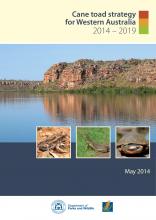
Cane toad strategy for Western Australia 2014 to 2019

BRB
Available Online

The Government of Western Australia, Department of Parks and Wildlife

Cane toads introduced to Queensland in 1935, are major environmental pests in Western Australia, having arrived here in February 2009. The Liberal National Government released a 10-year Cane Toad Strategy for Western Australia in 2009. Over the first five years of the strategy, much has been achieved and the government has invested more than $7.8 million in on –ground activities and research to help control the spread of can toads. With a range of stakeholders, including community groups, universities, the Australian Government, local shires, Indigenous groups and others, the State of Government has implemented many new can toad management programs including a field-based cane toad surveillance and response team, strengthened quarantine measures, a free-call hotline to report cane toad sightings and cane toad drop off points. Major biological survey work has provided benchmark information on important island wildlife populations that need priority protection from cane toad. Biological controls are also being researched for the survival of native wildlife species in the short and medium terms and management of cane toads in the longer term. Educating the community has prevented new populations from establishing in Perth and elsewhere. Detector dog specially trained to sniff out cane toads is a proactive measure to stem the spread of this noxious pest. This is a review and update on the original 10 year strategy to review and update the strategy to reflect progress in implementation, the current status of cane toads in WA and results of ongoing research, and to refocus its aims and objectives. Cost effective activities and an integrated approach with other initiatives across WA, such as the $81.5 million Kimberley Science and Conservation Strategy, are required. The revised Cane Toad Strategy for Western Australia 2014-2019 will ensure the available information is used to inform Wa’s continued management of cane toads.
Potential impact of climate change on the distribution of six invasive alien plants in Nepal.
BRB
Available Online

Shrestha Uttam Babu

The biological invasions have been increasing at multiple spatial scales and the management of invasive alien species is becoming more challenging due to confounding effects of climate change on the distribution of those species. Identification of climatically suitable areas for invasive alien species and their range under future climate change scenarios areessentialfor long-term management planningofthesespecies. Using occurrence data of six of the most problematic invasive alien plants (IAPs) of Nepal (Ageratum houstonianum Mill., Chromolaenaodorata (L.) R.M. King & H. Rob., Hyptis suaveolens (L.) Poit., Lantana camara L., Mikania micrantha Kunth, and Parthenium hysterophorus L.), we have predicted their climatically suitable areas across the country under the current and two future climate change scenarios (RCP 4.5 scenarios for 2050 and 2070). We have developed an ensemble of eight different species distribution modelling approaches to predict the location of climatically suitable areas. Under the current climatic condition, P. hysterophorus had the highest suitable area (18% of the total country’s area) while it was the lowest for M. micrantha (12%). A predicted increase in the currently suitable areas ranges from 3% (M. micrantha) to 70% (A. houstonianum) with the mean value for all six species being 29% under the future climate change scenario for 2050. For four species (A. houstonianum, C. odorata, H.suaveolens and L. camara), additional areas at elevations higher than the current distribution will provide suitable habitat under the projected future climate. In conclusion, all six IAPs assessed are likely to invade additional areas in future due to climate change and these scenarios need to be considered while planning for IAPs management as well as climate change adaptation.
Global rise in emerging alien species results form increased accessibility of new source pools
Biodiversity Conservation, BRB
Available Online

Alain, Roques

,

Alexander, Mosena

,

Andrew M, Liebhold

,

Barbara, Tokarska-Guzik

,

Benoit, Guenard

,

Bernd, Blasius

,

Bernd, Lenzner

,

Cesar, Capinha

,

Charlotte, E Causton

,

Darren, F Ward

,

David, Pearman

,

Dietmar, Moser

,

Eckehard, G Brockerhoff

,

Ellie, E Dyer

,

Evan, PEconomo

,

Franz, Essl

,

Giuseppe, Brundu

,

Hanno, Seebens

,

Heinke, Jager

,

Helen E, Roy

,

Ingolf, Kuhn

,

Jan, Pergl

,

John, Kartesz

,

Jonathan, M Jeschke

,

Julissa, Rojas-Sandoval

,

Katerina, Stjerova

,

Kevin Walker

,

Laura, Celesti-Grapow

,

Marc, Kenis

,

Margarita, Arianoutsou

,

Mark, van Kleunen

,

Marten, Winter

,

Michael, Ansong

,

Misako, Nishino

,

Nicol, Fuentes

,

Petr, Pysek

,

Philip, E Hulme

,

Piero, Genovesi

,

Riccardo, Scalera

,

Shyama, Pagad

,

Silvia, Rossinelli

,

Stefan, Dullinger

,

Stefan, Schindler

,

Stephanie, Rorke

,

Sven, Bacher

,

Takehiko, Yamanaka

,

Tim M, Blackburn

,

Wayne, Dawson

,

Wolfgang, Nentwig

,

Wolfgang, Rabitsch

Our ability to predict the identity of future invasive alien species is largely based upon knowledge of prior invasion history. Emerging alien species—those never encountered as aliens before—therefore pose a significant challenge to biosecurity interventions worldwide. Understanding their temporal trends, origins, and the drivers of their spread is pivotal to improving prevention and risk assessment tools. Here, we use a database of 45,984 first records of 16,019 established alien species to investigate the temporal dynamics of occurrences of emerging alien species worldwide. Even after many centuries of invasions the rate of emergence of new alien species is still high: One-quarter of first records during 2000–2005 were of species that had not been previously recorded anywhere as alien, though with large variation across taxa. Model results show that the high proportion of emerging alien species cannot be solely explained by increases in well-known drivers such as the amount of imported commodities from historically important source regions. Instead, these dynamics reflect the incorporation of new regions into the pool of potential alien species, likely as a consequence of expanding trade networks and environmental change. This process compensates for the depletion of the historically important source species pool through successive invasions. We estimate that 1–16% of all species on Earth, depending on the taxonomic group, qualify as potential alien species. These results suggest that there remains a high proportion of emerging alien species we have yet to encounter, with future impacts that are difficult to predict.