Search the SPREP Catalogue

Refine Search Results

Tags / Keywords

Available Online

Tags / Keywords

Available Online

299 result(s) found.

Sort by

You searched for

  • Collection Biodiversity Conservation
    X
  • Material Type Article
    X
The potential detrimental impact of the New Zealand flatworm to Scottish islands
Biodiversity Conservation, BRB
Available Online

Boag, B.

,

Neilson, R.

2019
The New Zealand ?atworm, Arthurdendyus triangulatus, is an alien invasive species in The British Isles and the Faroes. It was probably ?rst introduced after WWII and is an obligate predator of our native earthworms. It was initially considered a curiosity until observations in the 1990s in Northern Ireland found it could signi?cantly reduce earthworm numbers. In 1992, it was scheduled under the Countryside and Wildlife Act 1981 then transferred to the Wildlife and Natural Environment (Scotland) Act in 2011 which makes it an o?ence to knowingly distribute the ?atworm. A retrospective survey in Scotland showed that it was detected in botanic gardens, nurseries and garden centres in the 1960s but then spread to domestic gardens then ?nally to farms in the 1990s. Although the geographical distribution of A. triangulatus was initially con?ned to mainland Scotland it was subsequently found established on 30 Scottish Islands. Most of the islands are to the north and west of Scotland and have cool damp climates which are favoured by the New Zealand ?atworm. These islands also generally have relatively poor soils that support grassland farming systems. Evidence from both Northern Ireland and Scotland suggests anecic species of earthworm which occur predominantly in grassland, which help drainage and are a source of food for both animals and birds are at particular risk from the ?atworm. The detrimental impact of the ?atworm on soil processes and wildlife has yet to be quantitatively evaluated but unlike many other invasive species there is currently no known means of control. The precautionary principle must be therefore applied wherever possible and every opportunity taken to stop its further spread.
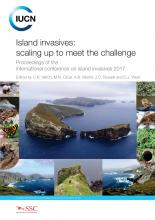
Island invasives : scaling up to meet the challenge.
Biodiversity Conservation, BRB
Available Online

Clout, M.N.

,

Martin, A.R.

,

Russell, J.C.

,

Veitch, C.R.

,

West, C.J.

2019
The papers in this volume were, with a few exceptions, presented at the third Island Invasives conference, held in Dundee, Scotland in July 2017. The papers demonstrate up-scaling in several aspects of eradication operations – not least in ambition, land area, operational size, global reach and of course financial cost. In the space of a few decades, the size of islands treated for invasive species has increased by five orders of magnitude – from a few hectares to over 100,000 ha or 1,000 km2. Meanwhile, the diversity of species being tackled has increased, as has the range of countries now actively carrying out island restoration work. Inspired by pioneers from New Zealand and Australia, principally, today the movement has spread to islands in all oceans and off all continents. This expansion has been informed by, and has in turn produced, growing experience in all aspects of this field, from non-target impacts to ecological responses to factors affecting eradication success. A major aim of publishing these Proceedings is to inform people who are, or will in the future be, planning new projects to free islands of invasive species. Regardless of its location or the target species involved, each successive operation builds on the experience of those who have gone before, and the papers in this volume represent an invaluable wealth of such experience.
Feral hog disturbance alters carbon dynamics in Southeastern US salt marshes
Biodiversity Conservation, BRB
Available Online

Angelini, Christine

,

Persico, Emily P.

,

Sharp, Sean J

2017
Disturbances that remove primary producers and alter substrate chemistry commonly influence ecosystem carbon dynamics. Because coastal wetlands are especially effective in sequestering carbon, quantifying how disturbances may alter their ability to perform this climate-regulating function is important for assessing their carbon storage potential. Here, we quantified soil respiration, litter decomposition, and soil organic carbon (SOC), as a proxy for carbon storage, in areas disturbed by invasive feral hogs Sus scrofa and in adjacent, undisturbed areas within 3 southeastern US salt marshes. Contrary to our hypothesis that hog overturning of soils would stimulate soil respiration, this metric was lower and both surface and subsurface litter decomposition rates were similar in disturbed relative to undisturbed areas across all sites. SOC was lower in disturbed versus undisturbed areas at 2 sites as hypothesized, but higher at 1 site. Surveys and analyses reveal that lower and less variable infauna, plant, and benthic algae densities likely suppressed soil respiration in hog-disturbed versus undisturbed areas, while the offsetting effects of lower invertebrate densities and higher soil temperature likely caused decomposition to be consistent within and outside of disturbed areas. . These findings suggest that hog removal of plants and disruption of soils can cause tracts of marsh to transition from carbon sinks to sources where these disturbances are intense enough to prohibit rapid plant recovery and promote the gradual respiration of carbon stocks from denuded soils.
An invasive ant distribution database to support biosecurity risk analysis in the Pacific
Biodiversity Conservation, BRB

Burne, Allan R.

,

Cooling, Meghan

,

Gruber, Monica A.

2017
Invasive species are one of the most serious threats to biodiversity. Up-to-date and accurate information on the distribution of invasive species is an important biosecurity risk analysis tool. Several databases are available to determine the distributions of invasive species and native species. However, keeping this information current is a real challenge. Ants are among the most widespread invasive species. Five species of ants are listed in the IUCN list of damaging invasive species, and many other species are also invasive in the Pacific. We sought to determine and update the distribution information for the 18 most problematic invasive ant species in the Pacific to assist in Small Island Developing States with risk analysis. We compared the information on six public databases, conducted a literature review, and contacted experts on invasive ants in the Pacific region to resolve conflicting information. While most public records were accurate we found some new records had not yet been incorporated into the public databases, and some information was inaccurate. The maintenance of public databases faces an enormous challenge in balancing completeness (~15 000 ant species in this case) with accuracy (the impossibility of constantly surveying) and utility.
Microplastic pollution identified in deep-sea water and ingested by benthic invertebrates in the Rockall Trough, North Atlantic Ocean
Biodiversity Conservation

Courtene-Jones, Winnie

,

Gary, Stefan F.

,

Mogg, Andrew O.M.

,

Narayanaswamy, Bhavani E.

,

Quinn, Brian

2017
Microplastics are widespread in the natural environment and present numerous ecological threats. While the ultimate fate of marine microplastics are not well known, it is hypothesized that the deep sea is the nal sink for this anthropogenic contaminant. This study provides a quanti cation and characterisation of microplastic pollution ingested by benthic macroinvertebrates with different feeding modes (Ophiomusium lymani, Hymenaster pellucidus and Colus jeffreysianus) and in adjacent deep water> 2200 m, in the Rockall Trough, Northeast Atlantic Ocean. Despite the remote location, microplastic bres were identi ed in deep-sea water at a concentration of 70.8 particles m 3, comparable to that in surface waters. Of the invertebrates examined (n ¼ 66), 48% ingested microplastics with quantities enumerated comparable to coastal species. The number of ingested microplastics differed signi cantly between species and generalized linear modelling identi ed that the number of microplastics ingested for a given tissue mass was related to species and not organism feeding mode or the length or overall weight of the individual. Deep-sea microplastics were visually highly degraded with surface areas more than double that of pristine particles. The identi cation of synthetic polymers with densities greater and less than sea water along with comparable quantities to the upper ocean indicates processes of vertical re-distribution. This study presents the rst snapshot of deep ocean microplastics and the quanti cationofmicroplasticpollutionintheRockallTrough.Additionalsamplingthroughoutthedeepseaisrequiredtoassesslevelsofmicroplasticpollution,verticaltransportationandsequestration,which have the potential to impact the largest global ecosystem.
Opportunities and constraints for implementing integrated land-sea management on islands
Biodiversity Conservation

Albert, Simon

,

Jupiter, Stacy

,

Klein, Carissa J.

,

Mangubhai, Sangeeta

,

Nelson, Joanna

,

Teneva, Lida

,

Tulloch, Vivitskaia J.

,

Watson, James E.M.

,

Wenger, Amelia

,

White, Alan T.

2017
Despite a growing body of literature on integrated land–sea management (ILSM), very little critical assessment has been conducted in order to evaluate ILSM in practice on island systems. Here we develop indicators for assessing 10 integrated island management principles and evaluate the performance of planning and implementation in four island ILSM projects from the tropical Pacific across different governance structures. We find that where customary governance is still strongly respected and enabled through national legislation, ILSM in practice can be very effective at restricting access and use according to fluctuations in resource availability. However, decision-making under customary governance systems may be vulnerable to mismanagement. Governmentled ILSM processes have the potential to design management actions that address the spatial scale of ecosystem processes and threats within the context of national policy and legislation, but may not fully capture broad stakeholder interests, and implementation may be poorly coordinated across highly dispersed island archipelagos. Private sector partnerships offer unique opportunities for resourcing island ILSM, although these are highly likely to be geared towards private sector interests that may change in the future and no longer align with community and/or national objectives. We identify consistent challenges that arise during island ILSM planning and implementation and offer recommendations for improvement.