Pacific Islands Renewable Energy Project (PIREP) : a climate change-mitigating partnership of GEF, UNDP, SPREP and the Pacific Islands : project document


Climate Change Resilience, Biodiversity Conservation
Available Online
Pacific Islands Renewable Energy Project (PIREP)
,
Secretariat of the Pacific Regional Environment Programme (SPREP) (SPREP)
2002
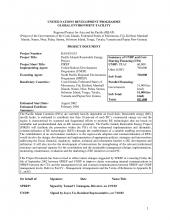
The Pacific Island Countries (PICs) are currently heavily dependent on fossil fuels. Renewable energy (RE), mostly hydro, is estimated to contribute less than 10 percent of each PICs commercial energy use and the region is characterized by scattered and fragmented efforts to promote RE technologies that are based on unreliable and unsubstantiated data on RE resource potentials. The Pacific Islands Renewable Energy Project (PIREP) will facilitate the promotion within the PICs of the widespread implementation and ultimately, commercialisation of RE technologies (RETs) through the establishment of a suitable enabling environment. The establishment of an environment conducive to the region-wide adoption and commercialisation of RETs would involve the design, development and implementation of appropriate policies, strategies and interventions addressing the fiscal, financial, regulatory, market, technical and information barriers to RE development and utilization. It will also involve the development of interventions for strengthening of the relevant institutional structures and national capacity for the coordination and the sustainable management (design, implementation, monitoring, maintenance, evaluation and the marketing) of RE initiatives in each PIC. This Project Document has been revised to reflect minor changes suggested by SPREP at a meeting Friday the 6th of September 2002 between SPREP and UNDP to improve clarity concerning internal communications in SPREP between the CTA and the management level and external communications between SPREP and UNDP management levels. Refer to Part IV - Management Arrangements and the Terms of Reference in Appendix B. C.and D.