Search the SPREP Catalogue

Refine Search Results

Language

Available Online

Available Online

14 result(s) found.

Sort by

You searched for

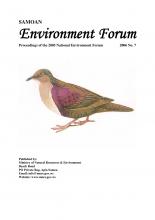
Samoan Environment Forum: proceedings of the 2005 National Environment Forum|The fact-or-myth of Samoan cultural heritage: personal reflections on family oral history / Tu'u'u Ieti Taule'alo|Samoan and Japan: concerns over mangroves development / Juliet Boon-Nanai|Status of hawksbill turtle nesting in Samoa, 2003/2004 / Mauigoa Lui Bell, Malama S. Momoemausu, Juney Ward & Malaki Iakopo|Participatory approaches for environmental initiatives - community consultation in Samoa / Natalie Mitchell|Emotional intelligence, management concept: a contributing factor for effective service delivery / Mulipola Ausetalia Titimaea|Tropical cyclone forecasting: theory and practical application - case study of tropical cyclone Olaf 2005 / Sala Sagato Tuiafiso|Samoa and the World Heritage Convention - is Samoa ready for world heritage listing / Tuiolo Schuster|Exploring the status of tsunami early warning systems in Samoa / Shaun P. Williams & Aliimalemanu F.M. Leavasa|Determination of a mean daily discharge values for Faleaseela River: implications for population water demand / Masina Nagau Chun, Iosefatu Eti & Mulipola A. Titimaea
Available Online

MNRE

2006
The community based conservation (CBC)paradigm predicts that sustainable biodiversity can only be achieved if local people perceive benefits from conservation. Through interviews, the situation in Samoa portrays that the CBC of mangroves was received with apprehension because the mangrove biodiversity was more significant than sustaining the livelihood of the local communities. In contrast, Iriomote Island residents were able to achieve maximum socio-economic benefits but to the extent that they were over commercializing the mangrove ecosystem. More research is imperative to find out how biodiversity conservation can be married with sustainable development objectives to sustain the local communities' livelihood.
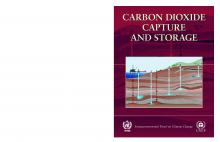
IPCC special report on carbon dioxide capture and storage / prepared by working group III of the Intergovernmental Panel on Climate Change
Climate Change Resilience
Available Online

Davidson O.

,

Loss M.

,

Metz B

,

Meyer, L.A.

,

de Coninck H.C.

2005
This Intergovernmental Panel on Climate Change (IPCC) Special Report provides information for policymakers,scientists and engineers in the field of climate change and reduction of CO2emissions. It describes sources,capture, transport, and storage of CO2. It also discusses the costs, economic potential, and societal issues of the technology, including public perception and regulatory aspects. Storage options evaluated include geological storage, ocean storage, and mineral carbonation. Notably, the report places CO2capture and storage in the context of other climate change mitigation options, such as fuel switch, energy efficiency, renewables and nuclear energy. This report shows that the potential of CO2capture and storage is considerable, and the costs for mitigating climate change can be decreased compared to strategies where only other climate change mitigation options a reconsidered. The importance of future capture and storage of CO2for mitigating climate change will depend on a number of factors, including financial incentives provided for deployment, and whether the risks of storage can be successfully managed. The volume includes a Summary for Policy makers approved by governments represented in the IPCC, and a Technical Summary.The IPCC Special Report on Carbon Dioxide Capture and Storage provides invaluable information for researchers in environmental science, geology, engineering and the oil and gas sector, policymakers in governments and environmental organizations, and scientists and engineers in industry.